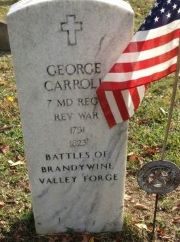
George Carell, our 7 x great grandfather, fought at Brandywine.
George used to say that "-me and another comrade were the sole survivors out of all our regiment at the battle of Brandywine."
"On September 11, 1777, General George Washington was determined to prevent the British from capturing the American seat of government, Philadelphia. Taking up positions along Brandywine Creek, Washington mistakenly believed that his army blocked all fords across the Brandywine.
Opposing Washington was Sir William Howe and an army of 15,500 British Regulars and Hessian troops. Hidden by heavy fog, the British moved into position. General Wilhelm von Kynphausen was ordered to demonstrate against the Americans’ front at Chadds Ford, while the bulk of Howe’s forces crossed the Brandywine further upstream.
The battle had been raging for hours by the time Howe's force appeared undetected on the Continental right flank. Washington dispatched troops under General John Sullivan and William Alexander, “Lord Stirling,” to shore up his right flank. However, despite putting up a stiff resistance, the Continentals were eventually overrun by Howe’s men.
Simultaneously, Knyphausen’s troops hit the American units that remained near the Quaker meeting house at Chadds Ford. Washington’s line collapsed.
To prevent the defeat turning into disaster Washington ordered Nathanael Greene’s division to act as a rear-guard so that the Continental Army could escape to the northeast. Greene’s brave men counterattacked, going toe-to-toe with British along the crest of Birmingham Hill. When night fell, the remaining Americans fell back in an orderly retreat, led in part by the Marquis de Lafayette. Although wounded, the charismatic young Frenchman remained on the field to ensure an organized withdrawal.
The crushing defeat allowed the British to occupy Philadelphia, but the bulk of the Continental army survived to fight another day."
With the Scanian War, Charles XI understood that the Swedish army was in a terrible condition. In the Scanian War they had written out all the people they could get hold of, from vagrants and farmhands to the farmers themselves.
This had led to the loss of labor needed in agriculture and to low Swedish morale. Now that, for the first time in a very long time, the war was being fought at home, many soldiers had the chance to desert - a chance that many took.
Because of this, the Swedish army had lost many men. The solution was the younger subdivision agency. The subdivision meant that a certain number of farms were divided into a rote that would pay a soldier's farm. On a soldier's farm, the soldier and his family were allowed to live and support themselves in exchange for the man participating in an exercise for one month a year and being ready to take up arms in the event of war.
At the same time, Sweden underwent the so-called the reduction. This gave the crown a lot of money which was used to equip the military. Among other things, the fleet was equipped and the Karlskrona military base was founded, among other things. The result of all this was that Sweden got Northern Europe's absolute strongest military force. Something that would prove to come in handy in 1700. Source: Wikipedia.
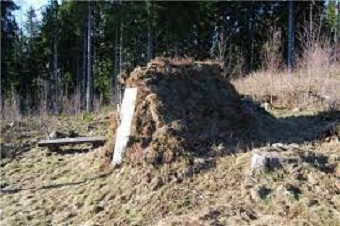
In the picture we see the Laberg soldier croft 936 S.K.C where Sextus John Nelson was born on 12 Dec 1879.
Nils Ericksson 1711-1782. Our 6 x great grandfather.
"At the beginning of his own household ..... farm on the estate Bolbynäs in Bosebo parish, where they lived for 7 years. Then he moved to N Hedenstorp for the first time and lived there also for 7 years. ..."
between 1754 and 1763: Residence - Gullbrandsbo u. Limmared's estate
Sources: Jönköping county museum - Personnel Båraryd and Våthult parishes 1738-1791 - Dracander, J. and J. - : -
"... He also took up farming at Limmared's estate and the farm Gullbrandsbo, where he lived for 10 years, and finally from there to Norra Hedenstorp..."
between 1763 and 1772 : Residence - Norra Hedenstorp, Bårryd (F)
Sources: Jönköping county museum - Personnel Båraryd and Våthult parishes 1738-1791 - Dracander, J. and J. - : -
"... and finally from there [the farm Gullbrandsbo under Limmared's estate] to Norra Hedenstorp again 9 years ago, where he finally, after several moves, had to end his arduous journey on earth."
--- : Additional-Bertil-Turesson
26 November 1772 : Death - Norra Hedenstorp, Båraryd (F)
Sources: Jönköping county museum - Personal records Båraryd and Våthult parishes 1738-1791 - Dracander, J. and J. - No. 12 - Personal records of the Danish man Nils Ericsson from N Hedenstorp d 20 December 1772
Mary Elisabeth Brundage/Brundish. Our 12 x great grandmother.
Our Brundage ancestors were a branch of the Suffolk family of Brundish in England, a medieval family that took its name from the village of Brundish near the River Alde in Suffolk. The village's name comes from the Anglo-Saxon words burna and edisc, which together mean "a stream with pasture," which no doubt refers to lands near the River Alde. Given the Anglo-Saxon origin of the village's name, it is evident that Brundish is of great antiquity, arising before the Norman Conquest.
It is known that Brundish's parish church, St. Lawrence's Church, was first erected as a Catholic church in Norman times, in the latter 1000s A.D. -- the lower three-fourths of the present church tower were built at that time, but the tower was heightened and the present nave, chancel, and porch were built between 1350 and 1480. There was also a Chantry adjacent to the church, established so that prayers and Masses could be offered for the soul of Sir Robert de Ufford, Earl of Suffolk, but the Chantry was suppressed and destroyed in 1545 after King Henry VIII outlawed Catholic Christianity and Catholic monasteries.
The manor of Burndish ("Burnedissh") or Brundish is first mentioned in the early 1300s, when John de Burndish is recorded as holding a half interest in Moreton manor in Essex. Regarding the village of Brundish and the Brundish family which originated there, Brundish/Brundage genealogical researcher Perry Streeter had this to say in his compiled genealogy, "John Brundish [Brundage] of Wethersfield, Connecticut" The town of Brundish, Suffolk, England existed by 22 May 1315 (Martin, The Ipswich Recognizance Rolls 1294-1327, A Calendar, p.61). Prior to the commencement of the local parish registers, any Brundish families had migrated to other towns within Suffolk. Source: Rootsweb.
Sextus John was born dec 12 1879 in Laberg soldier crofts, Tranemo Sweden as Sixten Adolf Johansson (Nilsson).
He arrived to New York in nov 1880 as an infant together with his mother Maria Christina Johansdotter and 3 siblings.
His father Johan Nilsson arrived probably in July 1880.
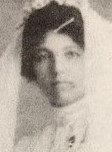
After that we can't find anything about the family until he appears as Sextus John Nelson in 1904 when he marries Laura Fay DeLancelyn Green in Kamloops, BC Canada.
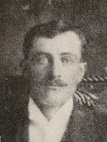
Rowland Edward Green.
Our 2 x great grandfather.
Rowland and his brother, George R Green, had their own photo studio at Fort St. south side near Government St.Victoria, BC Canada.
On our mother's side we are descended from George Carroll (Carell). We have not found his parents so far. But there are suggestions that they should be Daniel Carroll and Elisabeth Purdy. If this is true, it is an exciting family to follow back in time. Click here to see the suggested ancestors of George.
Our Swedish roots.
On our father's side, we originate from Sweden. It was Johan Nilsson, his wife Maria Christina and their 4 children who immigrated to the USA in 1880. It is difficult to find any information about the family after arrival.
Some quotes from our ancestors.
Me and another comrade were the sole survivors out of all our regiment at the battle of Brandywine.
~ George Carrel/Carroll
~
~
~
~
Wilfred Sutton Family
Wilfred Joseph John Sutton and Ada Elisabeth De Witt.
//
Sextus Nelson Family
Sextus John Nelson and Laura Fay DeLancelyn Green Married 4 Jun 1904 in Kamloops. BC Canada
Thomas Gordon Family
Thomas Gordon and Irene Trathen
James Bruce Family
" />
James Baxter Bruce And Grace Christina Stott
One child is missing in the picture. Here she is.
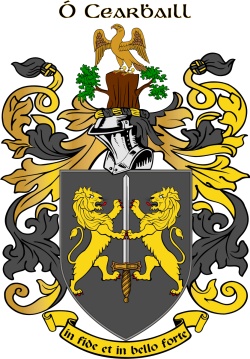
Donnell McTiege Oure O'Carroll
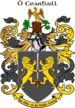
If it is true with the parents of George Carrol as we believe, then this is one of our ancestors.
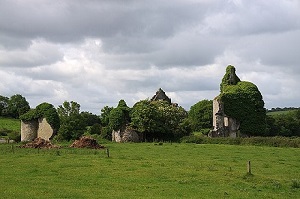
Donnell McTiege Oure O'Carroll, was born circa 1570, at Ballymacadam Castle at Litterluna, Ballybritt in the 'kingdom' of Eile in the midlands of Ireland. The Eile O'Carroll lands were shired in Kings County (Offaly) in 1605, and nothing remains of Ballymacadam castle which was located at the village of current day Cadamstown in County Offaly. Donnell is also variously referred to as Donal, Donat, Domnall and Donnaugh, since names were translated phonetically from Gaelic and spellings differed. From the early 1600's, Donnell called himself Daniel Carroll of Kenechane and Ballymooney under the plantation policies of Ireland at the time. Ballymacadam Castle (B'aile MacAdam Castle) sometimes known as Baile M'Carroll) was one of a number of O'Carroll strongholds along the borders of the Eile O'Carroll lands. It was taken by Edward Bellingham's commander Edmund Fahy, in 1548, by violent means, and the O'Carrolls in turn took it back by force in 1550. It was eventually surrendered under the 'surrender and re-grant' policy a few decades later. Lands at Killygreghane were also surrended to the English by Donnell O'Carroll. 'In 1594, the Ballym'Carroll, parcel of lands of Gillekeaghe M'Carroll, and of Ballymack-Carroll, lapsed to the crown. [Printed on the back of a Bookmark, produced by Classic Designs Ltd - see Coat of Arms]. Donnell McTiege Oure O'Carroll was re-granted significant acreage at Sierkieran about 15km south west of Litterluna, in exchange for: surrendering his property, anglicizing his name and adopting English farming and building ways. He agreed to take on only English settler tenants, as another condition of the re-grant and in 1622 he built Ballymooney Castle, a 4 storey fortified abode of which only ruins remain today, in a cow paddock.
The origin of our ancestors.
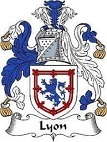
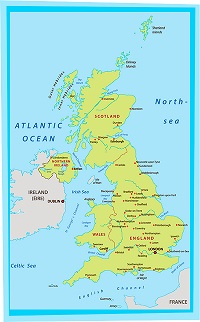
The majority of our ancestors originated in Great Britain and Ireland. A branch comes from Sweden.
Hope you have found pleasure in reading a little about our ancestors. As you can see, there is a lot missing, so if you have information, photos or a story to tell, we would be delighted if you would share it with us.










 His father Johan Nilsson arrived probably in July 1880.
After that we can't find anything about the family until he appears as Sextus John Nelson in 1904 when he marries Laura Fay DeLancelyn Green in Kamloops, BC Canada.
His father Johan Nilsson arrived probably in July 1880.
After that we can't find anything about the family until he appears as Sextus John Nelson in 1904 when he marries Laura Fay DeLancelyn Green in Kamloops, BC Canada.

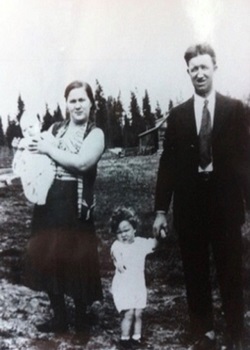
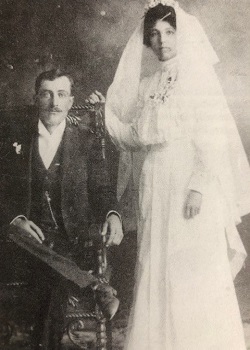
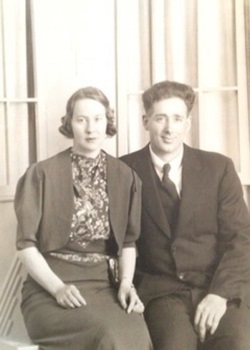
 " />
" />
 If it is true with the parents of George Carrol as we believe, then this is one of our ancestors.
 It was taken by Edward Bellingham's commander Edmund Fahy, in 1548, by violent means, and the O'Carrolls in turn took it back by force in 1550. It was eventually surrendered under the 'surrender and re-grant' policy a few decades later. Lands at Killygreghane were also surrended to the English by Donnell O'Carroll. 'In 1594, the Ballym'Carroll, parcel of lands of Gillekeaghe M'Carroll, and of Ballymack-Carroll, lapsed to the crown. [Printed on the back of a Bookmark, produced by Classic Designs Ltd - see Coat of Arms]. Donnell McTiege Oure O'Carroll was re-granted significant acreage at Sierkieran about 15km south west of Litterluna, in exchange for: surrendering his property, anglicizing his name and adopting English farming and building ways. He agreed to take on only English settler tenants, as another condition of the re-grant and in 1622 he built Ballymooney Castle, a 4 storey fortified abode of which only ruins remain today, in a cow paddock.
 The majority of our ancestors originated in Great Britain and Ireland. A branch comes from Sweden.